| Why the future of our planet begins not in boardrooms or global conferences, but in classrooms where children learn to care. |
What if the greatest achievement of education were not producing the highest examination scores, securing prestigious careers or accumulating academic qualifications, but nurturing human beings who are compassionate, courageous, responsible and committed to making the world better?
What if every classroom became a place where children learned not only how to succeed, but also how to understand others, protect nature, resolve conflicts peacefully and find meaning in serving humanity?
These questions have shaped my journey as an educator, peace lecturer and advocate of sustainable development. They have also strengthened my conviction that education must not simply prepare children for examinations. It must prepare them for life.
Beyond Textbooks: Educating the Mind and the Heart
For too long, education systems have measured success predominantly through grades, examinations and competition. Yet our world faces challenges that cannot be resolved through academic knowledge alone. Climate change, inequality, violence, intolerance, discrimination and emotional distress demand something more fundamental: an education that nurtures both intelligence and humanity.
As an educator associated with Edventica College, a Pearson Master Trainer and an International Examiner, I believe that academic excellence and human values must reinforce each other.
Central to my teaching philosophy is Social and Emotional Learning (SEL), which helps students develop empathy, emotional awareness, resilience, ethical judgement and interpersonal skills. When children learn to recognise their emotions, respect differences and appreciate the experiences of others, they become better equipped to navigate life's complexities.
A successful classroom should therefore be judged not only by how much children know, but also by how deeply they understand, how confidently they question and how compassionately they behave.
My teaching of English as a Second Language and Geography offers opportunities to connect language, culture, human experience and environmental awareness. Geography, particularly, helps learners understand the intricate relationship between human societies and the natural world. From climate change and resource consumption to biodiversity and sustainable communities, students discover that our everyday decisions have consequences far beyond our immediate surroundings.
My learning through the Institute for Humane Education has further strengthened my commitment to ethical critical thinking. I want learners to question assumptions, recognise interconnected global challenges and understand that knowledge carries responsibility.
Peace Education: Building Harmony Before Conflict Begins
Peace is often understood as the absence of war. I believe it is something much greater. Peace begins when we learn to respect differences, practise fairness, reject prejudice and acknowledge the dignity of every human being.
My active journey in organised peace education began in 2024, when I completed the Peace Lecturer Training Education programme with the International Women's Peace Group (IWPG). Subsequently, I became a representative of the IWPG Global Region 3 Karachi Peace Committee and received recognition as Best Peace Lecturer.
Through IWPG, I have conducted peace education and training sessions for women, encouraging dialogue, mutual understanding and greater participation in building peaceful communities.
I have also encouraged schoolchildren to participate in IWPG's annual peace art competitions. There is something deeply moving about watching young minds express their understanding of peace through colours, imagination and creativity. A child's painting of a harmonious world can sometimes communicate a message more powerfully than a hundred speeches.
My participation as a speaker at the IWPG Global Women's Peace Forum reinforced another important conviction: women are not merely beneficiaries of peace; they are essential architects of it.
When women are educated, empowered and meaningfully included in decision-making, families become stronger, communities more resilient and societies more equitable.
Peace education must therefore begin early, long before intolerance hardens into prejudice or disagreement escalates into hostility.
Sustainability Begins with Awareness, but Succeeds Through Action
Sustainable development cannot remain confined to international declarations or environmental campaigns. It must become part of everyday learning and living.
My commitment to Education for Sustainable Development (ESD) led me to undertake training through the Global Schools Program. I subsequently integrated sustainability principles into school curricula and had the opportunity to serve twice as a mentor.
My peace education curriculum was internationally recognised and featured in a published Global Schools Program case study. I was also honoured with Advocate of the Month recognition in 2024 and Mentor of the Month in 2025.
These experiences affirmed an important principle: sustainability education becomes meaningful when it moves beyond awareness to practical action.
Through ESD initiatives, I have encouraged educational institutions to adopt sustainability pledges and helped learners connect local environmental concerns with the United Nations Sustainable Development Goals.
As a Sustainability Speaker at Synergy Cambridge, I have engaged with schools on climate change, global challenges and sustainable practices.
Three Sustainable Development Goals have particular significance in my educational philosophy: SDG 3, Good Health and Well-being; SDG 4, Quality Education; and SDG 5, Gender Equality. Yet these goals cannot be pursued in isolation. Emotional well-being influences learning, gender equality strengthens communities, and quality education empowers people to protect both society and the environment.
I dream of classrooms where children reconnect with nature, where outdoor learning is valued alongside digital education, and where young people understand that a tree, a river, an animal or an ecosystem is not merely a resource to be exploited but part of the living world to which we belong.
A child who learns to love nature is more likely to grow into an adult willing to protect it.
Inclusion: Every Child Deserves the Opportunity to Flourish
Another important dimension of my work is inclusive education, particularly supporting gifted learners and children with diverse learning needs.
Every learner possesses a unique combination of abilities, interests, strengths and challenges. Yet conventional educational systems frequently expect children to progress at the same pace, demonstrate intelligence in similar ways and compete according to uniform standards.
This approach risks overlooking extraordinary potential.
I advocate flexible, supportive and appropriately adapted learning environments that allow students to develop according to their individual capabilities. Differentiated teaching, personalised support and the least restrictive appropriate learning environment are essential to ensuring that differences become opportunities for growth rather than barriers to achievement.
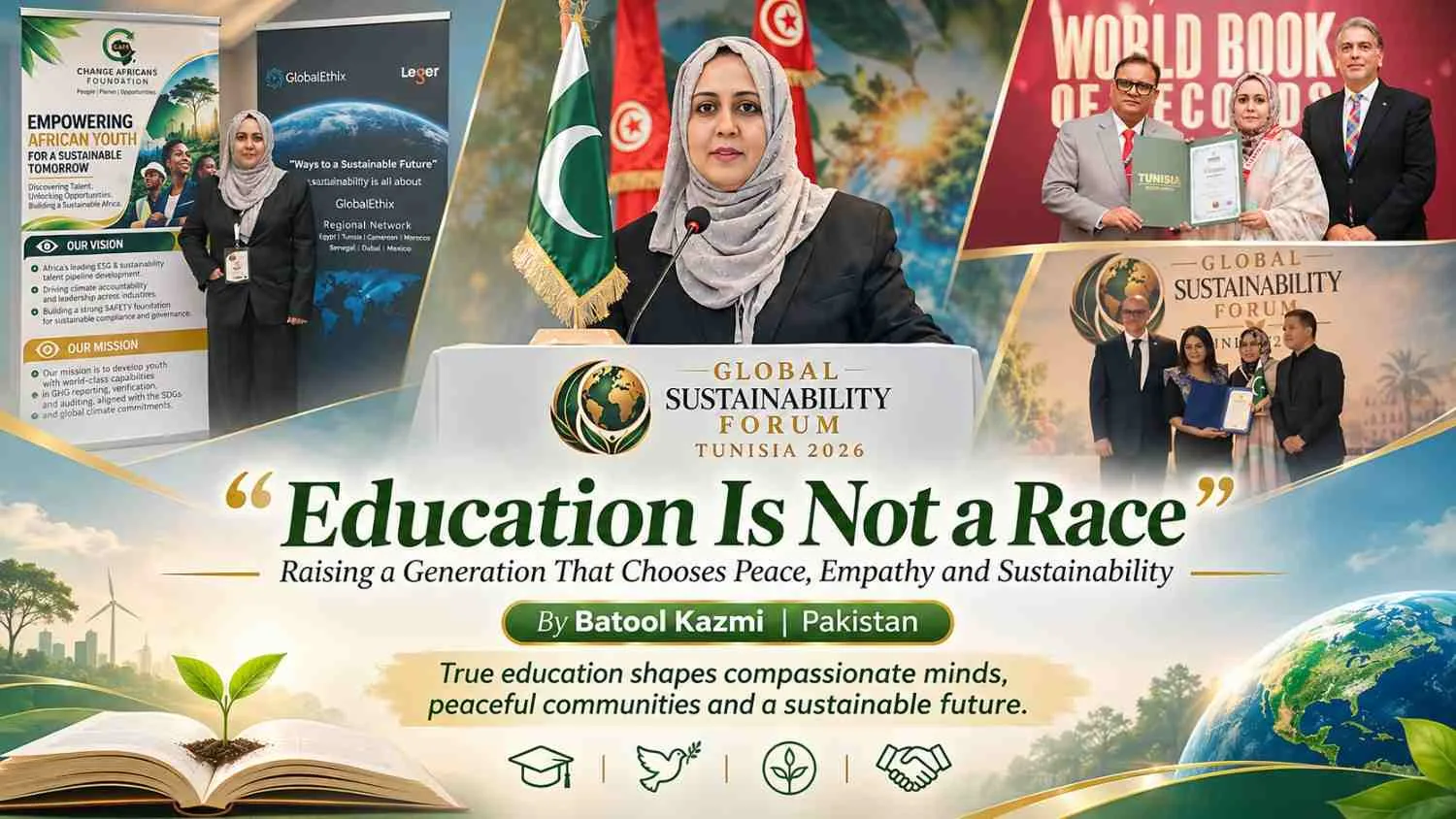
This philosophy also inspired my article, Education Is Not a Race, published in Edventica's digital magazine, The Gazette.
The responses I received from educators, professionals and, most importantly, students were deeply encouraging. Some students wrote to tell me that they felt understood, reassured and emotionally connected after reading the article.
Those messages meant more to me than any professional recognition.
They reminded me that sometimes the greatest impact of an educator is not measured by a certificate or examination result, but by helping a young person feel valued, capable and hopeful.
Reaching the Unreached Through Digital Learning
The promise of quality education remains unfulfilled for millions of children, particularly in remote and underserved communities.
Educational opportunity should not depend upon a child's geographical location, family income or access to prestigious institutions.
With the support of Edventica College, I am currently working on an initiative to extend quality education to remote areas through virtual learning.
Technology, when used responsibly and inclusively, can help overcome geographical barriers, connect learners with qualified educators and provide educational opportunities where conventional infrastructure remains inadequate.
However, technology must remain a means, not the ultimate objective. The human relationship between teacher and learner, characterised by encouragement, understanding and trust, must remain at the heart of education.
The future belongs neither to technology alone nor to traditional teaching alone, but to a thoughtful integration of innovation and human values.
From Pakistan to Tunisia: Learning Beyond Borders
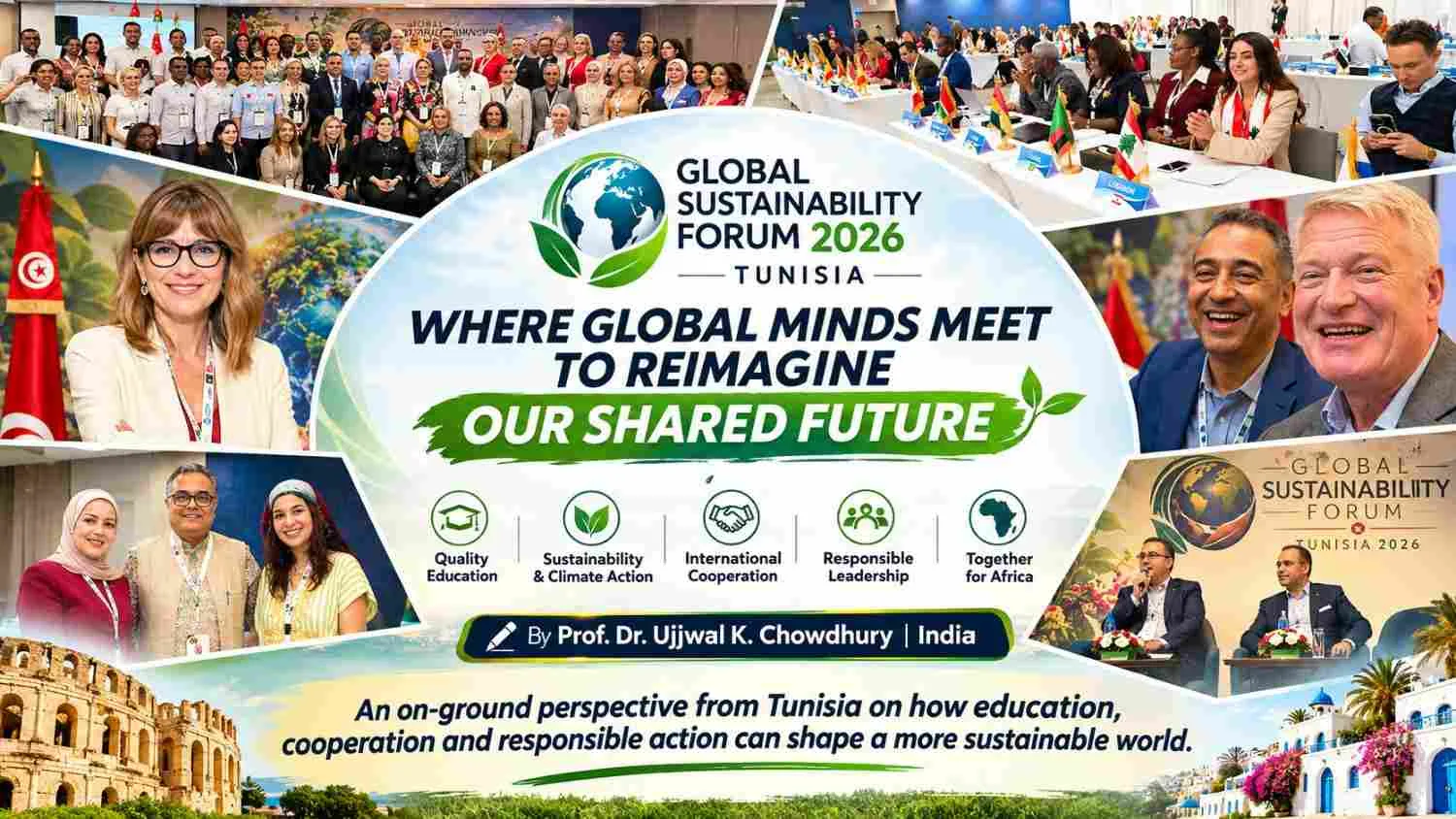
My recent participation in the Global Sustainability Forum in Tunisia further strengthened my belief that the world's greatest challenges require international cooperation and shared responsibility.
During this engagement, I completed training associated with Global Goals Connection and received Global Sustainability Ambassador accreditation through GlobalEthix. I was also honoured with a certificate of recognition from the London Book of World Records acknowledging my contributions towards education and international harmony.
Yet what remains most valuable to me is not the recognition itself, but the opportunity to connect with people from different countries, cultures and professional backgrounds who share a commitment to peace and sustainability.
Such interactions remind us that although our languages, traditions and national identities may differ, our aspirations for dignity, justice, education and a peaceful future are remarkably similar.
The international community must translate these shared aspirations into stronger educational partnerships, collaborative sustainability initiatives and practical opportunities for young people.
Global citizenship should not mean losing our cultural identities. It should mean recognising that our responsibilities extend beyond national boundaries.
The Education Revolution We Truly Need
I envision an educational system where peace, empathy, ethics, respect, environmental awareness and play-based learning are introduced from the earliest years.
Children should be encouraged to ask difficult questions, appreciate diversity, collaborate rather than merely compete, and discover the joy of learning.
Teachers must become mentors, facilitators and lifelong learners rather than simply transmitters of information.
My own continuing professional development, including certifications in Social and Emotional Learning, Classroom Psychology, safeguarding, protection, wellness, climate literacy and sustainability, reflects my belief that educators must constantly renew their understanding of a changing world.
But ultimately, education must be measured by its contribution to humanity.
Will our students become adults who reject hatred? Will they stand against injustice? Will they respect women and marginalised communities? Will they protect the environment? Will they use their knowledge to help those who have fewer opportunities?
If the answer is yes, we will have achieved something far greater than academic excellence alone.
A Life of Purpose Is a Life of Service
There is a philosophy that continues to guide my personal and professional journey:
Everyone can live for themselves, but the deeper purpose of life is discovered in service to others.
For me, education, peacebuilding, women's empowerment and sustainability are not separate professional interests. They are interconnected expressions of that philosophy.
The educator who develops empathy contributes to peace. The peacebuilder who empowers women advances equality. The school that teaches sustainability protects the future. And the society that makes education inclusive strengthens the foundations of human dignity.
I draw inspiration from a beautiful saying often attributed to Hazrat Ali ibn Abi Talib:
"Be like the flower that gives its fragrance even to the hand that crushes it."
To me, these words represent the extraordinary moral strength of responding to adversity with kindness, to hatred with dignity, and to division with humanity.
Our world desperately needs more of this spirit.
We need children who grow up believing that kindness is strength, peace is possible, differences can enrich humanity, and protecting the planet is a shared responsibility.
Education is not a race to reach the finish line before others. It is a lifelong journey towards becoming better human beings, together.
And if we can nurture that understanding in every child, perhaps the classrooms of today will become the birthplace of a more peaceful, inclusive and sustainable world tomorrow.
Add a Comment