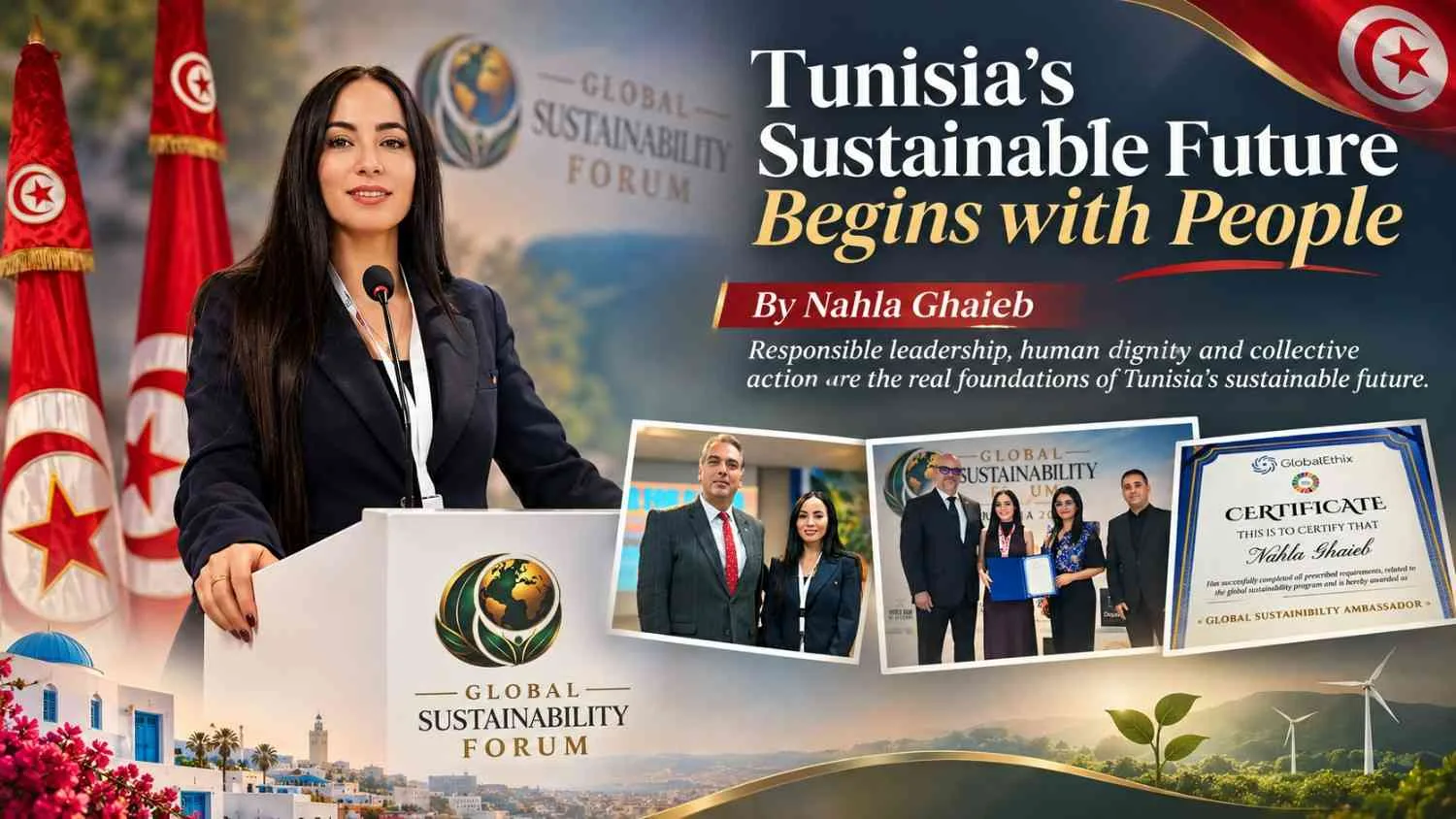
A country’s sustainable future is shaped by the choices made in offices, workplaces and communities every day. As an independent management consultant in Tunisia, I see sustainability as a responsibility that begins with people: how we lead them, respect their dignity and create opportunities for them to contribute. Economic progress becomes meaningful when it supports both human wellbeing and environmental protection.
This conviction connects my interests in organizational development, human resources, workplace wellbeing and inclusive leadership. An organization’s success should be understood through its effects on employees, communities and natural resources alongside its financial performance. Responsible management requires ethical decisions, effective communication and equal opportunities. The economic, environmental and social dimensions of sustainability must develop together.
Tunisia offers considerable possibilities for putting this approach into practice. Solar and wind energy can support a more sustainable economy, while experience in wastewater treatment and reuse offers lessons for managing scarce resources. Sustainable agriculture and community initiatives also deserve attention. These opportunities matter most when they improve daily life and open pathways for young people and women.
Yet the pressures are substantial. Water scarcity, drought and rising temperatures affect agriculture, food security and households. Strengthening waste management, accelerating the energy transition and improving environmental awareness require sustained cooperation. Public institutions, businesses, universities, civil society and international partners each have a role. Our challenge is to turn shared ambitions into practical projects with measurable benefits.
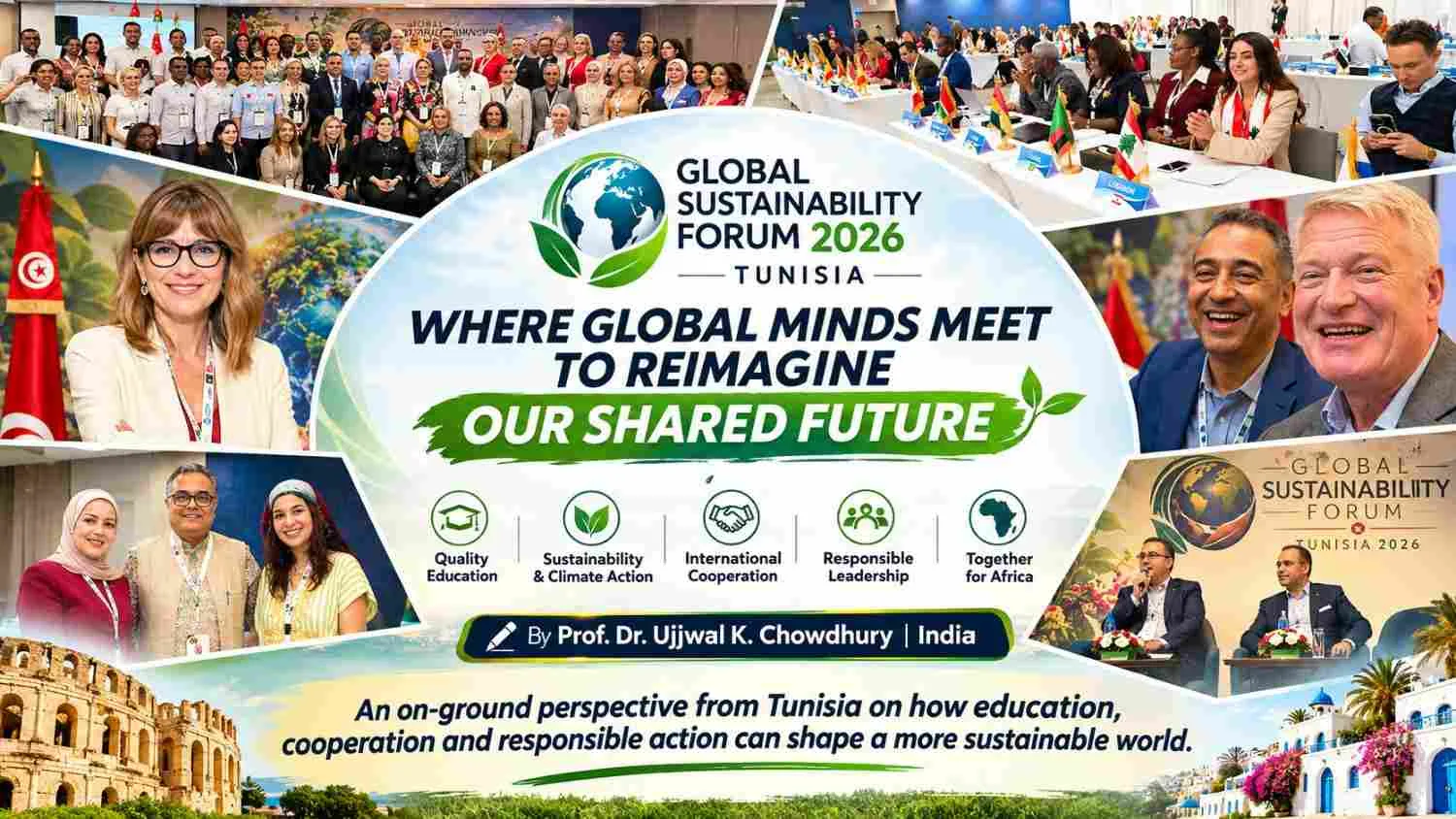
Participating in the Global Sustainability Forum 2026 in Tunisia strengthened my understanding of that challenge. Representing Tunisia in the forum’s United Nations simulation on climate change and food security encouraged me to examine water scarcity, resilience and international cooperation from a diplomatic perspective. It brought home the connections between environmental pressures, economic vulnerability and the responsibilities countries share.
The workshops, training sessions and exchanges with international participants reinforced another lesson: knowledge gains value through its application. Meeting people from different backgrounds widened my perspective and highlighted the importance of cooperation across cultures and institutions. I left with a stronger determination to connect what I had learnt with initiatives rooted in people’s needs.
One area demanding attention is women’s safety in digital spaces. Online harassment, blackmail, exploitation and other forms of digital abuse can undermine wellbeing, employment and participation in public life. For me, protecting women’s dignity and security belongs within social sustainability. Empowerment must include the freedom to communicate, work and participate without fear of abuse.
I am therefore developing an idea provisionally called “You Are Not Alone – Makshek Wahdek” (ماكش وحدك). Still at the concept stage, it would promote awareness, digital safety and solidarity with women exposed to online abuse. My hope is to build partnerships with legal professionals, cybersecurity specialists, psychologists and civil society organizations to help women find appropriate guidance and support.
Developing this idea reminds me that responsible leadership begins with listening and recognising what others can contribute. Meaningful partnerships require trust, complementary expertise and a clear understanding of community needs. The same principles apply to Tunisia’s wider sustainability journey: progress depends on cooperation that connects environmental priorities with opportunity, inclusion and human dignity.
Looking ahead, I intend to strengthen sustainability within my professional work and support greater participation by women in decisions shaping our future. I envision a Tunisia where young people can enter green industries and communities benefit from innovation and international exchange. Every individual and institution can contribute. Sustainable development begins with people, grows through responsible leadership and succeeds through collective action. The future we leave to the next generation will depend on the choices we make together today, including whose voices we hear and whose dignity we choose to defend.
About the author
Nahla Ghaieb is an independent management consultant from Tunisia and a Global Sustainability Ambassador. Her professional interests include organizational development, inclusive leadership, human resources, workplace wellbeing and international collaboration. She advocates responsible management, women’s empowerment and development that advances environmental protection alongside human dignity.
Add a Comment